[Below is an edited transcript of the informal talk I shared at the ServiceSpace retreat in 2016. Gratitude to Anuj for the back-end work that led to a transcript.]
I'm going to take a little bit of a systems or telescopic lens in t

That was just a little bit more of my own personal riff, but the reason I'm feeling really passionate about this is that I really feel like we're at a inflection point in our history. One of those multi-century inflection points similar to what we saw with the rise of the printing press – which led to the decline of the Holy Roman Empire, the rise of nation states, the Enlightenment. So many things started happening at least in part because of that and that kind of transformation happens every couple hundred years.
Then a few hundred years after the printing press, we had the industrial revolution. The invention of the steam engine in the late 18th Century led to factories, urbanization, and an outpouring of moral, political, social and economic philosophy – from Adam Smith to Rousseau and Mill – leading to modern governmental and market institutions. And mass-production of steel and of railroads in the late 19th Century made widespread the use of the corporate form -- which actually, ironically, began with the East India Company. The East India Company was the first modern corporation, but it became wide-spread after the spread of the railroads because they were organized as limited liability companies.
I feel like we're at one of those inflection points now with technology where a lot of our seventeenth and eighteenth century institutions of governance are going to go by the wayside. I think there's an opportunity in this moment of disruption to articulate something and really articulate something that will tap upon the emerging collective consciousness that we all feel in this room.
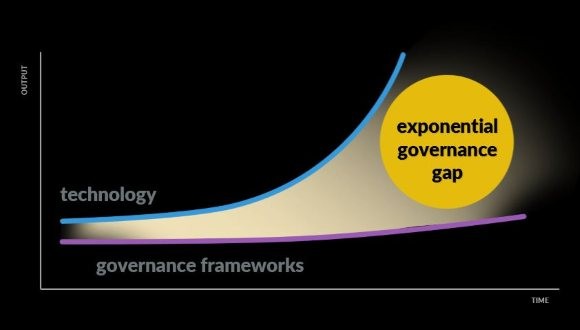
One of the things I talk a lot about is, what I call, the exponential governance gap. We have technology growing exponentially, we have the capacity of our governance frameworks at best, rising slightly, if not going down. What we have is an exponential governance gap and the only way we're going to fill that gap is by not simply working where I've worked my whole entire career, which is within those governance frameworks, but rather also where ServiceSpace is operating -- which is within that gap. I see the rise of more peer-to-peer systems of governance and ultimately, self-governance which is going to have to go fill that gap. I don’t see a way where we can have these top-down governance systems continue to manage this consciousness and the flow. I see the real innovative work happening where ServiceSpace is happening ... and I think a lot of our upcoming work should be around the awareness of external conditions, the various systems that constrain us, understanding how to skillfully use their principles against them and being part of articulating the change. It's not just being the change but it's also channeling it and articulating the change. It's the story of me, the story of we, as well as the story of now.
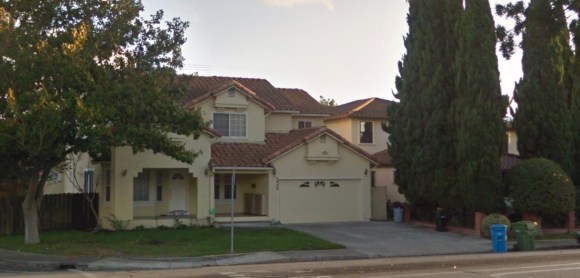
I would just end with the statement that I've said repeatedly. In my own experience it's been: “From the Supreme Court to the White House, I finally found the right house.” [Note: the photo below is the home/space where Awakin Circles were started and continue to be held in Santa Clara, and where ServiceSpace was founded.]