Story Booth: Natalie Porias
Virtual
About This Event
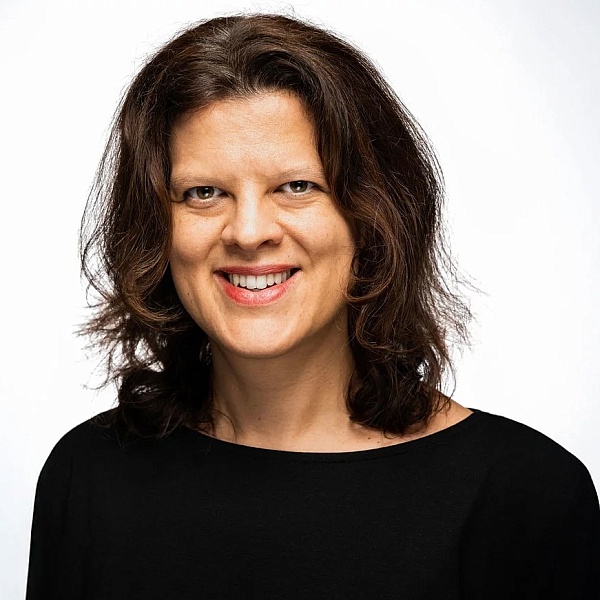 Natalie leads a community, movement and nonprofit that taps into the transformative power of laughter. Red Noses International meets people in tender moments of health crises and sparks joy through the power of "clowning". In a world that is increasingly disconnected, clown artists arrive and create a genuine human connection.
Clowning In Disaster And Crises Zones
Full Transcript
Andy Smallman: You mentioned if there's a humanitarian crisis.
Natalie Porias: And again.
Andy Smallman: Tell us a story, or give us a specific example, if possible.
Natalie Porias: So, the humanitarian program that we have is kind of our youngest program at Red Noses. By young, I mean it's about 10 years old, which in comparison to the 30-plus year existence of the healthcare program, is young. I can tell you, let me try to find a good story. Well, usually the news is kind of the first source of information that you get, and I don't know why.
For some reason, a lot of times, especially natural disasters, they happen around the weekend, right? So you're not in the office. I remember when the earthquake in Turkey hit, the big one almost 3 years ago, it was also on the weekend, and we didn't have a team there. But I immediately knew this is going to be a big one, right?
I mean, there was a size of Germany affected, and hundreds and thousands of people affected, under the rubble, and I knew immediately that we need to do something there. Also knowing from my own work with traumatized children is that especially, earthquakes, kind of create the highest trauma response in people, and so I knew this is what we've been on, and this is where we need to go. So my team and I put together a first scouting, not mission, so we didn't go there, but we then entered into contact with Doctors Without Borders and all our partner organizations, just to assess the situation on the ground, because we're not first responders, we're second responders. So, that would be then that we get the information needed, where's the area that's affected the most, how long is the first response going?
And then Turkey was a little crazy because we didn't have a big partner on the ground, as three months after the earthquake happened, so we just contacted somebody who leads a community center in one of the cities, and he invited us over, so I went with a team. On a little scouting mission for two weeks, and it was really crazy. It was right after I became CEO, and basically my first assignment as a CEO was a humanitarian mission, scouting mission, into an earthquake area. And I grew up in Turkey, so this country is very close to my heart, also.
I spent my childhood years in Ankara, in Turkey, because my father is a diplomat, now retired. And so I immediately knew I wanted to go there, and we really spent—nothing was working, no hotels. And we flew into one of the largest cities where you can fly into, rented a car, and drove into the area where the earthquake hit. And we slept in this community center, and I just became CEO.
And here I was sleeping on a bunk bed, just separated by a curtain with my three colleagues, all of them guys, and I'm in the middle of it. But once you're there, you're just like, it's okay, I have a bed, I didn't lose my house. And we just started to explore and to try to understand the magnitude of what happened. And it was hard at this point.
It was about 2-3 months after the earthquake to really understand the structure. But then one thing leads to another, and you get to know this one person that helps you. In our case, it was a teacher. And we didn't speak, so I speak a little Turkish, but just enough to order food, so not to have a big conversation, but somehow, in these moments, you do not need words.
And I remember she was… we called her our Turkish mama, because she also took care of us in this way, and she opened all the doors for us, and so we basically sometimes just started to do our activities right on the road, on the street, almost like a street theater, because everybody was affected. And we just went through these makeshift camps, and I remember this military guy, a lot of times, a lot of them were organized by the military. And we go through, and you have to imagine when the clowns start their work, music and connecting with the people, we always draw a crowd because it's this instantaneous moment of joy. And people don't really know what's going on, they just feel it's something beautiful.
And I see this military general, I assume he was the one with all these medals and stuff, and soldiers walking towards us. I'm thinking, oh, we're in trouble. But in the end, he just stopped and looked at us. And he just started to laugh and pointed at the clowns and me, and said something in Turkish, and just basically shook my hand, took pictures with the clowns, and he was like, it's okay, you're allowed to work here.
And I think this is sometimes so beautiful, this simplicity of human connection. You just go in, and without an agenda, your only agenda is, I want to connect with the people, because we don't even want to bring something specific. Obviously, when you then put the research hats on and trauma work, obviously our work has this impact of relieving stress, increasing the mental health, and being able to cope with trauma. But this is not what we're thinking about in the moment.
We really want to be there, and some of the nicest moments happen, for instance, from the way to the car to the actual activity. In this particular camp afterwards, I even have a little video of that. One of our artists just started singing with a kebab vendor. He just put a makeshift thing on the street, and he was selling kebab.
And they were just starting to sing, he was playing—my teammate, he was playing on the ukulele, and the guy just started to sing in Turkish. And it was just so beautiful, and that drew a little crowd. And it's just all these moments of these beautiful human connections that are just built on the pure essence of humanity. Not of no agenda, no transaction, nothing, no intended transaction.
This just continues to amaze me, even after more than 20 years with this organization. I'm just so amazed by this ability of professional clown artists to create these moments. So in Turkey, we had so many of those because we went kind of rogue. Now, we have our structure, our partner organization, and the work is much more structured and amazing, but I particularly enjoyed this wild mission, because also I just became CEO, and the transition to becoming a CEO, taking over from the founders, was not easy.
It's just an interesting journey in the lifespan of an organization. I think founders stepping out, new generations stepping in, it's an interesting dynamic. It has its absolutely amazing, inspirational, and beautiful aspects, and there is also friction. Of course, change is never without friction or without discomfort, and I was a little tired.
Counterintuitively, because I didn't sleep well for two weeks, and then I'm vegetarian, which is also quite a challenge in Turkey, so I basically had to eat chicken, because people shared the food with us, so I felt super awkward saying, actually, I'm a vegetarian. But these two weeks gave me back, reconnected me so much to the purpose of what I want to do. Creating these meaningful connections with people, and… And in this community center, the manager brain kicks in, and I'm like, oh my god, we don't have an activity today, and I was supposed to go to the center, but they never reconfirmed, so what are we gonna do? And I remember my teammate, he just gave me a coffee in my hand, and he was like, and I'm not going to repeat the exact same words, because I needed to be beeped out.
He's just like, calm the down. And somehow, that gave me a lens. Immediately after I let go, children just came. And in this community center, and the artists were so amazing, they immediately picked up some of the instruments, and we bring little props for circus skills to teach circus skills, and they immediately made this impromptu circus workshop with 5 kids.
It was not planned, but it was so beautiful. So, I just love these humanitarian missions, and Turkey in particular. Gave me a lot of reconnection to purpose and meaning, and understanding that you can't plan things, but somehow they will work out. And also seeing how people who literally lost everything are still human beings and are able to dance and sing and laugh with you, and it always gives me such a humbling experience, right?
I mean, I'm sitting here in Vienna, it's considered, I think, the second most livable city in the world. Everything works, everything. I don't know, we have literally nothing to complain about. So, it's such a humbling experience without words.
You share food, you share laughter. Music is such an important aspect of this work. And, yeah, it was just beautiful. And now I want to go again.
I have nothing planned for this year, but I think I want to go on a mission next year, for sure.