Story Booth: Natalie Porias
Virtual
About This Event
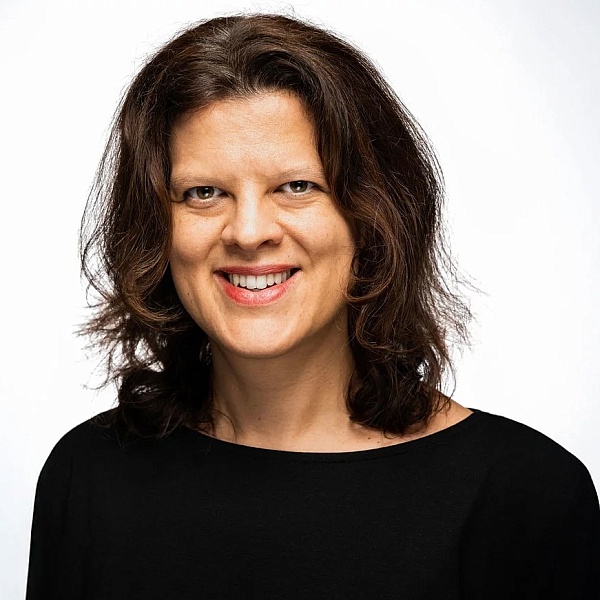 Natalie leads a community, movement and nonprofit that taps into the transformative power of laughter. Red Noses International meets people in tender moments of health crises and sparks joy through the power of "clowning". In a world that is increasingly disconnected, clown artists arrive and create a genuine human connection.
From Diplomat's Daughter To CEO Of Joy
Full Transcript
Natalie Porias: So when I came into this organization almost 20 years ago, I started as an intern, and I worked my way up to the position of CEO, which is quite unusual, but I fell so much in love with the philosophy of clowning and the art of clowning, and bringing it to people in need of joy. And so, one of these pivotal moments for me was really when I mentioned it before that I'm the daughter of a diplomat. I had a wonderful life, I love my family, I have a good connection with them. In diplomacy, emotions are not that welcome, or it's not part of the blueprint, let's say it like this.
You learn a lot of other things, you learn discipline, you learn commitment, you learn open-mindedness, you learn to take different perspectives, you learn to show up, so it's like I learned so much from my family, but somehow. The part where emotions are welcome, and not something that you need to feel and not just handle, was a bit underrepresented in my childhood. And when I started my internship, I was in my mid-20s, at Red Noses. I had this moment of...
I was invited to an artistic workshop, and people were coming from all over our organization, so not quite 11 countries back then, but let's say 5 or 6 countries. And they were so much united by this commitment to kind of create, and I think creativity is such an important aspect that I was lacking a little bit. It has to do with creation, right? Being connected to something bigger than yourself.
And they created art for something good, right? In order to connect people. And they were so welcoming, and I never felt so seen. The joy I felt, and it's so hard to explain, because there is a difference between funny, haha, and I had a good time, and I felt entertained, and this pure essence of joy, right?
It's one of our basic emotions, so we need it, we literally need it to survive joy. That gave me so much energy that when I came back from this weekend attending this workshop, I still remember I was taking the tram from my little flats to the office, and I knew this is the organization where I want to work. I really learned through the art of clowning that all emotions are welcome, not just the ones that we like to feel, because basically there is only joy that's considered a positive emotion, right? If you think about this, this is such an interesting concept, so it's like all the other emotions that we have.
Are they not valid? Are they something that we just need to accept? Or are they also equally important? And then I learned through the art of clowning—I'm not an artist myself, but I have the privilege to work with so many amazing artists—is that two things at the same time can be true, right?
And the clown play is not a binary, right? It's not. So actually, it's always saying yes, because if you say no in a clown play, the game stops. Then there's nothing you can give your partner if you say no to an offer.
And that's also saying yes to all of the emotions. So when we see a… because we go to hospices, we see… I saw children passing away, and it was a beautiful moment, and tears are okay. And it's kind of to believe in the beauty of all human emotions, so we put that then in our, what we call the theory of change. And so I learned through all of these moments that I got the privilege to witness me being in humanitarian deployment, or in the hospital, in an oncology ward, or even in a geriatric ward.
Two things at the same time can be true. You can be ill, you can have a disease, you can suffer, and I think this is where we as a society, we need to kind of… the word OR should kind of constitute with end, right? And you can be happy. And maybe only for a moment, but it's not… it's like a rainbow, right?
You need the sun and the rain to have the rainbow. And for me, that was such a liberating moment, and for me, this is such a secret to life. It's very difficult sometimes to hold. Because everything needs to be, or the society or the narratives out there, they look for this binary, because it's something we can control.
It's either light or dark, or it's up and down, but the opposites also create each other, right? Without an up, there is no down. Without light, there is no dark, and without dark, there is no light, and so to accept that. This is what makes the human experience the human experience.
I think, for me, that's what Red Noses represents, and that's why I want to be there, and I want to bring that to the world, because I feel that if more people understand that, it creates more empathy, it creates more human connection, more relationships, and somehow, this is what we need, right? And I think this is what ServiceSpace is also about, is that we cannot rely on the people in power and all these concepts of capitalism and so on and so forth. It's just a concept, but the human experience is something else, and I think clown artists, that's my vehicle of understanding this. I think there are many other vehicles, but it's just so simple.
And by simple, I don't mean easy, because a good clown is a highly trained professional, highly trained. So we put more than 400 hours of training into our artists, years of training, because you need to have all these skills to become this person. It's almost like, if I'm thinking about it out loud now, it's almost like Zen Buddhism. A clown is always present and never judges.
And you kind of walk into the room without judging. You don't see the sickness, you don't see the refugee camp, you just see the human being, and you're curious. So, one of the big questions that a clown is always holding inside is curiosity, or it's just the question is this, oh, interesting. And then you put a… and by this, you start exploring, and then you find out so much about humans, and I've seen it also in the field, also in Turkey, again.
To connect it with the story, we were working at the food line with a faith-based organization, wonderful organization, volunteers, and then they were handing out food at the specific… and it's always… food lines are always a little stressful, especially when you come with your kids, you need to wait in line, and it's boring. This is amazing when we can work there, and there was this elderly lady. She just came, and then she started interacting with one of our artists, and somehow that's the magic. They know, they pick, I don't know, they gravitate towards each other, and I have all the video of that.
Unfortunately, I can't share these things, because that would be a bit of a—it's private, and it's intimate moments, but they're for myself. And they just had this little skit. He was trying to play his ukulele, but he would drop something, or he would get tangled, and she would step in and just kind of show, like, come on, dude, why would you get it? And she was sitting there for at least 45 minutes, and afterwards, the gentleman who ran the food line came to me, and he's like, you know what?
I've never seen her laugh or interact with any person. And we tried, we really tried to get through to her and to give her space. And, I mean, it's very tragic. She didn't only lose parts of her family in the earthquake, but right before the earthquake, she lost her son in a motorcycle accident.
And it's just sometimes you hear stories, you're like, come on, universe, are you kidding me? What else can you put on someone's plate? And this moment where she laughed and then felt empowered, so that's what I mean, we cannot take that away, ever. Her story is her story, but we can maybe put a little bit of a sparkle so that she feels that it's not all dark.
That you can have light and dark, and they can happen at the same time. So that's this big power of end that I want to create in the world. It's don't think in a binary, just replace, or just use the word "and" a little bit more in your day-to-day language, and you will see how things change. Replace "but" with "and." Oh, this was a great job, and here are the three things you should do differently.
And if you say, that was a great job, and here are a few things that would make it even better. Yeah, and this I all learned from clowns, and I do believe that the philosophy of clowning actually comprises all the leadership skills that you need, right? It's presence, it's empathy, it's not judging, it's not saying no. Strange, because obviously, as a leader, sometimes you need to say no, but it's more the mindset of curiosity, of exploring, of believing in the potential, and not to shut everything down.
I've literally seen policemen dancing with us. We have this desire to connect and to play and to feel the joy. I'm talking a lot, any conflict. Sorry.
Andy Smallman: That's what you're supposed to be.
Natalie Porias: I know!
Andy Smallman: You're doing such a lovely job. You're making my role here almost unnecessary. You're so good at this. You said so many wonderful things there.
Natalie Porias: Hmm.
Andy Smallman: And one of the things that just very naturally came from me was the story of the woman in the lion. That is so touching.
Natalie Porias: Hmm.
Andy Smallman: I mean, that just sums up, I think, everything that you're doing, and I'm wondering when you think about the work that you do, and you have stories like that. How often do you tell one, or is there one that is your go-to? Or was that one of your go-to stories to illustrate the important work that you do, and you tell a story like that? Are there more you can tell us, I guess, is what our—
Natalie Porias: There are many more. I have to admit that I don't have these are the three stories I will always tell. I also trust the flow in that, so I didn't intend to talk about Turkey, but your question somehow led there, and then I suddenly remembered these moments, so it's not like I have these amazed. Because in the end, fundraising is important, all of these things are important, so there we really use the power of storytelling to also spread our word and to also get the funds in.
I mean, that's just the reality that we live in as a nonprofit organization, so we need supporters. But I think, for me, the stories sometimes, because they happen so unexpectedly, right? And it can be these small moments. And yes, there are so many more, and sometimes they happen in the most unexpected moments, so basically you go to a child-friendly space, and you know that you will have this performance, and afterwards you will have the circus workshop.
And so that's all wonderful, and a lot of times, some of my most memorable things or stories that I've been told happened in between these moments. So there was another one, where I wasn't present in this one, but it stuck with me because it's so beautiful. It was in Greece, on the island of Lesvos, where there is still a huge refugee camp. And the clowns were actually at the end of their performance.
And one of the clowns has an accordion, this instrument that you play, and you have to imagine if you're a refugee, if you're forced to leave, you also leave everything behind that kind of makes you human, or that is important to you, like your musical instruments, or all of these things. And there was this gentleman who just walked up on him and signaled, hey, can I... play that, so can I... and then he started to play, and it was so beautiful, that it was just, and he started to sing, and it's...
and these moments happen a lot, where you kind of, So, stunned by the simplicity and... but the... the deep humanity, right? It's like you basically share a moment of music, or...
or laughter, and, yeah, so, and I... we also, I really particularly love, also, being there for the humanitarian aid staff, or the healthcare staff, because there's under so much pressure, and you do not have the privilege that we do, because if you organize a food line. There have to be rules, there have to be things in place, because it can... If it's a larger food line.
This is where tensions get really high, and so you need to maybe, or even say no if somebody wants something else. And we have this privilege of not being in that position. And that also helps the people who are literally saving lives. So, I also hear sometimes of the humanitarian aid staff be like, ugh.
Thank you, it was just so nice to see the people laugh, and to just laugh myself, and to be included in this interaction, and... Yeah, so that's also beautiful.