Medicine of Flow Orientation Call
Virtual
About This Event
Dear Friends,
Something beautiful is gathering. Across countries, cultures, and many different walks of life, people are coming together for seven days around a shared inquiry: What becomes possible when we meet healing with less striving, and more flow?
We’re delighted to welcome you into this collective field of practice and exploration.
We begin together this Sunday, Sept 13 at 9:00 AM PT, with an orientation call — a chance to meet one another, share reflections, glimpse the arc of the week ahead, and begin cultivating this field together through a short qigong practice.
Guiding the flow will be your pod hosts:
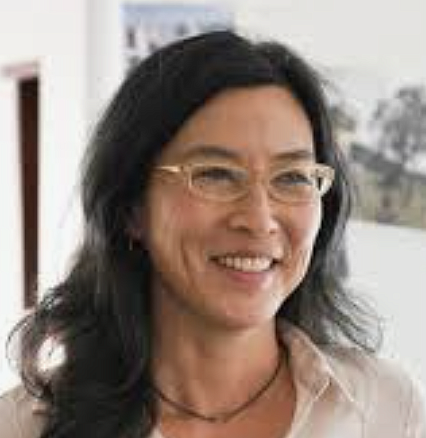 Cynthia Li, a medical doctor and qigong teacher whose personal health crises brought her ever deeper into questions like, What is healing? What is the essence of our bodies? How does awakening relate to healing?
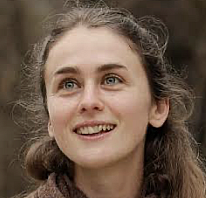 Sarah Tulivu, a peace activist and qigong teacher who realized, while serving in humanitarian conflict zones, that inner peace was essential to outer peace, and spent six years of immersive monastic training in a Tao Temple in Guatemala.
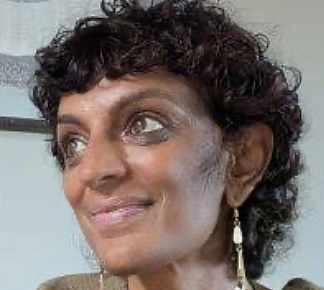 Pavi Mehta, a writer and poet who has co-anchored several ServiceSpace initiatives, ever curious about designing systems for generosity, whose deep healing journey led her to qigong.
We will also be joined by a special guest:
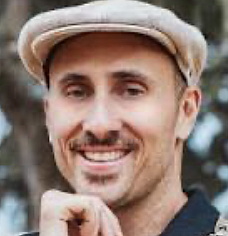 Madhu Anziani, a musician and ceremonialist whose firsthand experience of healing from quadriplegia, with energy and sound healing to complement medical interventions, continues to guide his life and work.
Please RSVP below and the details will land in your inbox.
We look forward to seeing you on Sunday and embarking together into effortless healing!
Sarah Tulivu: Embodying Flow Practice
Full Transcript
Sarah Tulivu: You're invited to stand or stay sitting. Or lying down, however. You're able and comfortable. Yeah, either can be practiced that way.
The type of Qigong that I've trained with, I trained in a Dao Temple and monastery, is very meditation-based. It was practiced by the monks in the mountains, particularly in Taiwan. But also then, if you go back. Through the couple thousands here to other lands.
Like China and Japan. Yeah, let's come into Pavi a bit more. So we go for 10 or 15 minutes. So let's take a moment together to arrive in our bodies, finding our feet to the ground.
Noticing our breath. And I'd start with an invitation to soften. Soften our intention. Even soften our attention as we come a bit closer, listening to ourselves.
Into our breath. To the weight on the feet. And invite us to come at the head, Uchmadu invited us in his son, come in inside of the head, and finding that expansiveness in all directions. And we connect to the point at the top of the head.
It's called the crown point, nicknamed as such, and we want to feel a bit like we're a marionette hanging from a string. So there's this point of elevation, and then from there, you release, and find that gentle expansion. The transparency. And from our head.
Coming down, again, very gently through the torso. Upper part of the torso, the chest, the upper back, and allowing it to let go a bit. Release, and again, soften. Still staying connected to the crown.
So the crown point is our point of extension, elevation. So from there we hang and release. What we found in a lot of our retreats, usually after a retreat, there's always a few people that the backache improves. Or it goes away altogether, along with some other physical issues, and a lot of that is making space.
Making space through the vertebrae, releasing, letting go of the contraction of the holding. And so, as we connect to up, we release down. Again, making space through the spine. Allowing for mobility in the spine.
Settled movement. The knees bend slightly. So they're not locked. And as we bend the knees, you relax the feet again, past the crown.
The highest point in the head is suspended. And we breathe. Feet are parallel to each other. And the weight is even in the feet.
So can we continue to explore the weight? Gently. And even if we're sitting on a chair, releasing through the feet equally. Or if we're lying down, releasing through the feet equally.
And the top of the head is connected and open up, also for lying down, connected and open. And we want our center of gravity, and of the weight to be at the lower dentian, which is at the lower belly, lower back, abdominal area. So we get this sense that that's our center of gravity. I would suggest that we carry these basic principles into washing the dishes or waiting for the bus.
Sitting down for food. Just keep releasing down, connecting to the suspension up. Allowing for gentle movement and softening through the body. And we breathe.
Thin breath. Out breath. And from that center, I spoke of the center of gravity, the Lower Dantian. You can begin to gently turn side to side, and really let go of the arms, let go of the shoulder, the breath.
So the arms are swinging side to side and lightly tapping. And gradually increasing the movement. Letting go of the shoulders. There is… And we add to this also shifting of the weight.
If you're standing, shifting side to side. So, this is more of a standing little opening for a few moments. And then slowing down. Healing the body, the effect of the movement in the body.
And we continue to breathe. And with the out-breath. We sink down slightly, finding the feet, the weight on the ground. And then with the in-breath, we connect to that point at the crown, at the top of the head, and legs straighten a bit, so we rise a bit, and we allow the arms to start to float a little bit, side to side.
And then again, out-breath. Letting things release, sinking down. Coming closer. So if your mobility is limited, you can find the feeling of the movement.
Of this expansion out, feeling the arms expanding out, and from the center out of the body. And then from out, returning in. This can be done synchronizing the breath or not. And let's repeat one last time.
So we're hanging from the crown like a marionette, and letting go of the weight through the shoulders, the chest, the spine, into the feet. Sinking down, knees bend slightly more. And then following this floating up. Expanding, and allowing the palms to come around.
And forward. And pointing to the lower Dantean receptor. Stay there, a moment at the lower dungeon. Connected.
And allowing the breath to slow down. Also, deepening with the breath, maybe it finds different pathways that I hadn't visited yet today. And following the name. Hands come a bit closer, not so our attention, we let it come slightly closer towards the body.
And then we allow the hands to float out and up. And as they float out and up, we are so with the feeling. We expand. Extend, connecting from out.
Back to in. And we repeat. In… Till out. Even we allow the eyes to be part of our practice.
The gaze comes closer in. Maybe allow the eyes to close for the purpose of the exercise. And then following out, so not losing the inside, we connect outward. Still remembering the inside.
Connect out. And then remember the out. As we follow back in, connecting in. And let's repeat.
In. Finding the in, remembering the in. Staying connected. To the in as we expand out in all directions.
So the feeling comes out in all directions, including the environment, maybe beyond the walls. Extending. And then inclusive of that, knowing of that. We return back.
And so we'll make this movement smaller. As we expand out, the hands move like a small version of the moment we just made. And then as it comes in, we let our attention and our feeling come closer. And it becomes smaller and smaller.
Still remembering the extension out of the environment. And the inner landscapes together. And the tool becomes smaller and smaller. Till they come into one point.
Yin and yang, meeting together, coming in union. They'll learn their qualities, but in union. And let's come into a closing form. Letting the hands open.
Following this release. And into expansion. Hands open forward. Wrapping around, allowing them to float up.
Again, letting the attention soften. And they connect up, and following in, then. And here we come into a bath. Yin, this is yin and yang together, so the yin and brisine yang.
Here we have a small point between middle finger and thumb. And then the palm is open, they come together, and they connect to the heart, which is the chest. And then we come forward as much as you're comfortable, and bow to each other, to the hold, and to the field. Coming up from the feet, through the spine, vertebra per vertebra.
Up until the crown. It's like we put this wisdom of yin and yang together into the heart, and letting it expand out, connecting to each other, to the field, and to the whole. And bending it, come back to the center. Remembering the center.
Hands to the side. Staying connected to the feeling and the body as we come back to sitting. And as we engage with the screen, can we still stay aware of our breath? Enough the weight on the chair.
Enough the crown suspended, and the release through the spine, and our center of gravity.
Loading blog...