
Awareness: From Content to Context
"The eye sees only what the mind is prepared to comprehend." – Henri Bergson
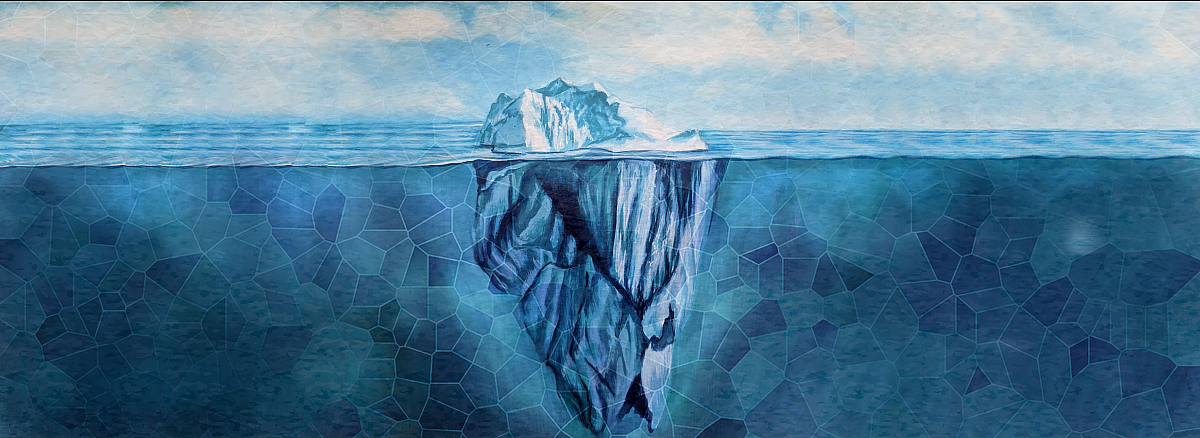
A German professor traveled to Japan in the 1920s to study Zen archery. For years, he was only allowed to shoot at a straw roll a few feet away. Frustrated, he asked when he could aim at a real target. His teacher replied, “The way to the goal is not to be measured!” When finally given a target, his arrows flew wildly off course. “My aim must be poor,” he admitted. But his teacher corrected him: “It is not about aiming. It is about how you approach the task itself.” That night, in total darkness, his teacher shot two arrows -- both hitting bullseye. He had no need to see the target because he saw everything around it.
Like archery, life is not just about hitting the mark. It is about expanding our awareness of the whole field.
The most fundamental truths are often the hardest to see. Our minds swim in unseen currents—assumptions, biases, and invisible forces that shape what we perceive as possible. Yet we often fixate on content—the immediate, measurable, and visible—without considering the context that gives it meaning.
As the parable goes, an older fish swims past two young fish and asks, “How’s the water today?” The younger fish glance at each other in confusion. “What’s water?”
In an era when ChatGPT can feed us instant content, what kind of intelligence can create a context that mirrors the deeper interconnections behind our content? Similarly, in our own lives, how do we leapfrog beyond the visible “content” of our experiences to uncover their hidden layers of meaning? And as designers, how do we align ourselves with the deeper contextual forces that shape our lives? Without context, markets reduce us to sellers and buyers endlessly chasing better bargains. Schools become places to fill the pail of information, but fail to light the fire of wisdom. Communities become spaces where we live alone, together. In a culture biased toward the instant and the visible, how do we regenerate a deeper context—within us, between us, and in our systems?
Perhaps clarity isn’t about looking harder at what’s in front of us, but widening our gaze to what we’ve overlooked.
Laddership isn't about doing more—it is about seeing more. When we cultivate awareness beyond the immediate, we unearth hidden assumptions, unlock deeper intelligence, and begin designing in alignment with forces larger than ourselves.
Today’s module invites us to step back and ask: What is the water we are swimming in? What unseen forces shape our thoughts, decisions, and actions? And how do we sharpen our perception—not just to hit the target, but to sense the whole?
Start with a moving 7-minute film, made by a teenager on a $25 budget: "The ordinary is the part of our world where beauty is interlaced in each detail. It's the part of our world that can knock our socks off, but so many of us walk by everyday, never knowing, never caring -- but some see."
Start with a mind-bending video clip (3 mins) about our vision, and complement it with Rachel Naomi Remen's moving story of finding new eyes (6 mins).
Watch cognitive scientist Lera Boroditsky give a glimpse of how human minds have invented 7,000 languages -- or "cognitive universes" -- which create an internal context for our thoughts: How Language Shapes the Way We Think (14 mins)
Dive into a fascinating 73-minute video (yes, it's long, but engaging!) by Robert Sapolsky, a world-renowned biologist and neuroscientist at Stanford, diving into impulses that factor into each of our actions: “You are going to get nowhere if you say, 'Here is the part of the brain that caused this behavior'. Instead we need to look back one second, seconds to minutes, hours to days, weeks to months, back to adolescence and childhood and fetal life, back to fertilized egg, and back millennia before that to understand why a person acted the way they did.”
Close it out with Tracy Cochran's vivid moment of awakening to a more expansive context (12 mins): The Night I Died on a New York Street "My opinions about what I believed or didn’t believe, what I was capable of or not capable of, were just smoke to be brushed away."
[For more, see bonus bibliography.]
Do something that brings you joy—listen to music, share a laugh, or savor a small moment of beauty. Then, take a walk without a destination. Instead of focusing on where you're going, simply notice. Observe how your awareness naturally expands when you’re in a positive state—the sky shifting above you, the fragrance of flowers, the hum of life moving all around you. Feel your breath, your heartbeat. Let your gaze soften. See if you can follow the throughline from the apparent to the subtle. Is it just a flower, or a symphony woven by the wind, the bees, the soil, the stars?
How does joy shape what you perceive?
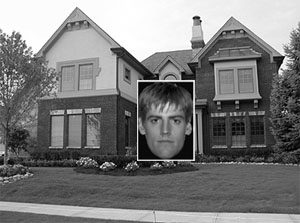 Science suggests that when we are in a positive state, we don't just see more—we sense more. In a fascinating experiment, researchers asked participants to focus only on a face in an image while ignoring the background. But when people were in a joyful state, their brains couldn’t help but register the full scene. They saw not just the face, but the house behind it, the space it existed within.
In that spirit, bring a quiet curiosity to your walk. Let joy widen your field of awareness, not just to what is in front of you, but to the larger context it belongs to. Notice what shifts when you move through the world this way.