
Coming Alive: Infinite Play of Joy
“I slept and dreamt that life was joy. I awoke and saw that life was service. I acted, and behold, service was joy.” – Rabindranath Tagore
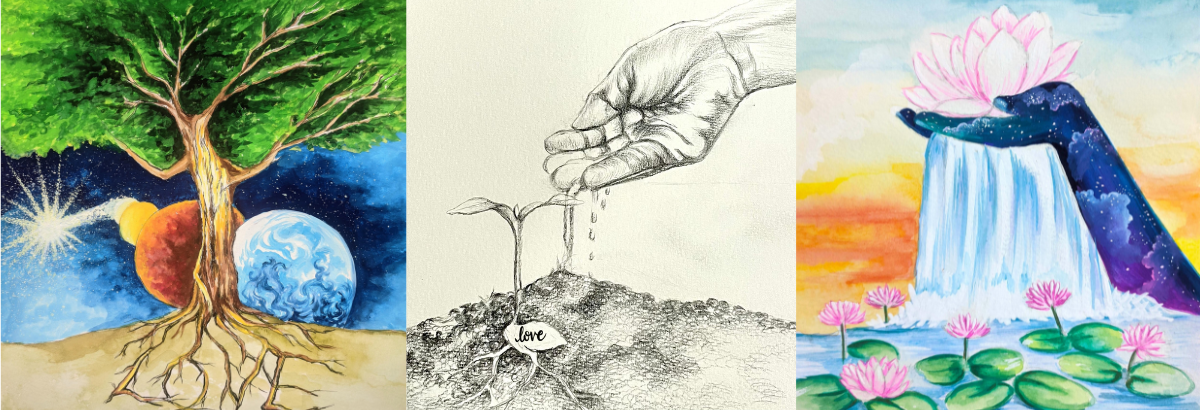
What if joy is not the opposite of suffering—but its secret doorway? What if it’s not the reward at the end of struggle, but the quiet strength that helps us meet it with grace?
Throughout this journey, we’ve moved from Me to We to Us. We’ve explored laddership not as control, but as a deep listening—an ability to tune into the living field around us and trust in emergence. We’ve considered the difference between finite games—structured around outcomes, certainty, and winning—and the deeper invitation of the infinite game: to stay in the play, to serve rather than solve, to move forward not by force, but by flow.
And now, we arrive at one of the most surprising insights of all: joy isn’t something we find after we’ve eliminated suffering. It is what enables us to hold suffering without collapsing. Thich Nhat Hanh said, “Suffering and joy are not enemies. They dance together.” This dance asks something profound of us: to let go of the illusion of permanence, to soften our grasp on control, and to open ourselves to the constant unfolding of life.
In a world that often pushes us toward quick fixes, control, and competition, joy might seem naive. But real joy—the kind born from presence rather than outcome—is anything but fragile. It is resilient. It doesn’t deny pain; it gives us the strength to stay with it, to meet it with compassion, and even to transform through it.
This is where equanimity comes in—not as numbness or detachment, but as inner balance. It allows us to feel fully without being overwhelmed, to stay present with both joy and sorrow without needing to hold onto either. To live with equanimity is to live with a kind of elegant courage. It is to neither numb ourselves nor cling to passing highs, but to remain inwardly spacious—available to joy, and its effortless impulse to serve.
Enjoy a 2-minute clip of two remarkable ladders, who deeply hold the suffering of the world, and yet embody the deep joy of service:
When we are fully alive, impermanence no longer threatens us. In fact, it becomes the source of our vitality. We realize that nothing lasts forever—and so we cherish what is here. We move with life, not against it. We stop trying to control the ocean and instead learn to ride the wave.
This is the heart of playing an infinite game. It’s not about arriving; it’s about aligning. It’s not about perfection; it’s about participation. Like the starlings in murmuration, we don’t need to control the whole—we simply tune into the few closest to us and respond with care. Like the fireflies syncing in the dark, our joy becomes contagious, guiding others toward their own light.
For those of you who miss the readings, :) here's a few optional reads:
- Say Wow, a short poem by Chelan Harkin that went viral around the Internet when she first published it.
- I Became an Optimist the Night My Wife Died: "We can’t make a perfect world. But we owe it to ourselves, to those around us, to those we have lost and those who have yet to come, to make the best of it that we can. The best of all possible worlds."
- Last Days of Zach Sobiech: a deeply touching video of a teenager who teaches us how to hold impermanence with grace.
- Room For Everything, a short reading by Pema Chodron. "Sticking with that uncertainty, getting the knack of relaxing in the midst of chaos, learning not to panic – that is the path."
Along our 20 days of the Laddership Pod, we’ve encountered this spirit of service in many forms. When we trusted our inner voice amidst the noise. When we redefined value through presence rather than possession. When we moved from transaction to relationship, and from control to coherence. And most recently, when we learned to design not with blueprints, but with trust in emergence.
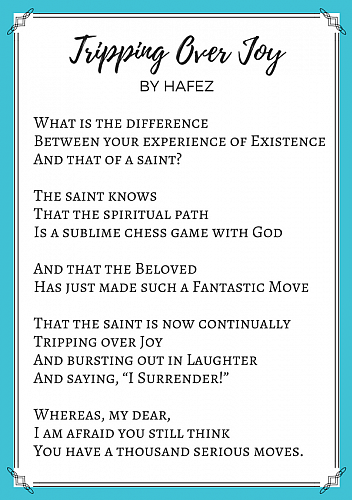
Today, we remember what helps us come alive—not in spite of impermanence, but because of it. How do we continue to serve from a place that’s not driven by urgency or fear, but by love that renews itself? What does it mean to lead, not just with effort, but with grace?
Because maybe the most powerful act of laddership is not a grand plan or perfect answer—but simply becoming a steady presence. One through which others remember the joy of being alive.