
Technology: Innovation and Wisdom
"The real problem of humanity is that we have Paleolithic emotions, medieval institutions, and god-like technology." --E.O. Wilson
Yesterday we explored how power can be held generatively — not as dominance but as orchestration, creating the conditions for others to step into their own agency. We closed with a question: do the tools we build to extend our power amplify our wisdom, or only our reach? Today, we sit with that question directly.
Technology has always been a tool for leverage. Our ancestors created fire to extend warmth, the wheel to expand movement, and language to deepen connection. But alongside tools that amplified their muscles, senses, and intellect, they also cultivated practices to expand their spirit, intuition, and heart. Today, in an era of exponential acceleration, technology shapes not only how we live but also how we think, relate, and imagine what is possible.
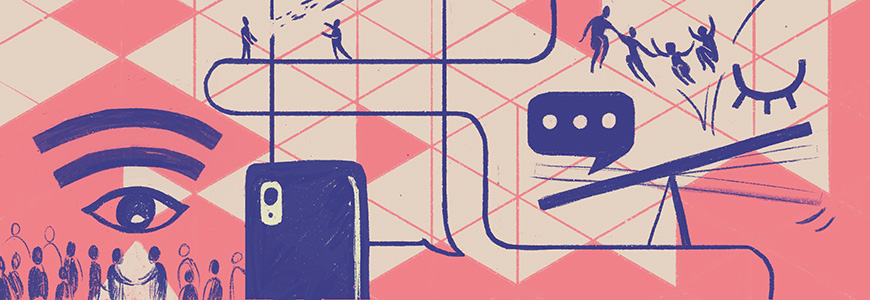
As artificial intelligence, automation, and digital ecosystems advance at breakneck speed, they do not just enhance our capabilities — they amplify the status quo. Television took 75 years to reach 100 million users, Netflix did it in 10, ChatGPT in 2 months, and Facebook Threads in just 5 days. With this unprecedented velocity, what values and assumptions are being embedded in the systems we create? If technology automates what already exists, what happens when the existing structures are broken?
We stand at a threshold. AI has the potential to leapfrog humanity into deeper wisdom or entrench us in greater disconnection. Social media has already hacked our attention, and AI now threatens to disrupt intimacy itself — simulating human presence while eroding real connection. How do we ensure that technology serves our highest aspirations rather than our basest instincts?
If technology is moving at the speed of light, how do we anchor it in wisdom? How do we ensure that our tools do not shape us more than we shape them?
Today’s module explores a question that all of humanity is grappling with — what does it mean to be human in the age of AI? It invites us to see technology not merely as an external force, but as a mirror of who we are and who we aspire to become. And tomorrow, we’ll carry this mirror into the question of how ideas, compassion, and meaning actually move through our networks — by broadcast or by something deeper.
Begin with a short audio meditation: The Rooted Rock
Here’s the twist: this meditation was generated by an AI, built with the active guidance of indigenous elders. As you listen, notice your response. Does knowing its origin change how it lands? Can a machine channel wisdom — or only the words that point toward it? (You can interact with the bot here.)
On a more musical note, try this hip-hop remix by East Forest, with Ram Dass voice excerpts — technology weaving ancient voice into new form:
Start with the potential of tech. Watch a talk from a scientist who has been working in AI for six decades, whose predictions have been astonishingly accurate: Last Six Decades of AI — and What Comes Next (13 mins). “In 1939, chips could make 0.6 calculations per day. Six months ago it was 130 billion per second. Today it’s 1.35 quintillion per second. This changes everything.”
Now sit with the shadow side: AI Dilemma — How Do We Steer Towards a More Humane Future? (20 mins). “We didn’t design the world we live in today — the incentives did.”
Consider an alternative: AI and Heart Intelligence (HI) (20 mins). “Instead of charting a seductive escape into the virtual worlds of a meta-verse, can we imagine a better party? A ‘metta verse’ perhaps (metta is the Sanskrit word for loving-kindness).”
[Extra: Can AI help us communicate with 8 million non-human species? The answer, it seems, is yes! For more, check out today’s bonus bibliography.]
Have a gadget-free dinner with your loved ones — or yourself. Become aware of your impulse for distraction, every time you reach for a device. (To add some factoids to your conversation: we refresh our phones 2,617 times per day, while app creators repeatedly admit that they “exploit vulnerabilities in human psyche.”)
After dinner, sit with the question: what did you notice in the space where the phone usually lives? Boredom? Presence? Relief? Something else?
Bonus: Explore if everyone is up for doing a 21-day Mindful Technology challenge!
Also, try out ServiceSpace’s CompassionBot — built with 25 years of curated content, it’s a live experiment in what happens when AI is trained on wisdom rather than extraction. Some example queries:
- What do you do when you’re confused and have to make a decision?
- What should I do if my values don’t align with my job?
- Is it more ethical to rent or buy?
- What are your views on scale? What about money?
- Is it a selfless act if we feel good in giving?
- What would the Buddha think about this bot and about the possibility that the descendants of ChatGPT will lead to the extinction of humanity?
- Can you write a poem to a first grader about being mindful while playing computer games?
- Respond in Chinese: how can I grow my heart?